


Phone:
+86-15218865186

Views: 0 Author: Site Editor Publish Time: 2025-12-09 Origin: Site


Choosing the right industrial fan motor for your facility is a critical decision that can impact the efficiency, performance, and longevity of your equipment. Whether you are replacing an old motor, designing a new ventilation or cooling system, or upgrading your facility’s equipment, selecting the right motor is essential for ensuring smooth operations and minimizing downtime.
In this article, we will explore the key factors you need to consider when choosing an industrial fan motor, including motor types, size, efficiency, environmental conditions, and maintenance needs. We’ll also provide practical tips to help guide you through the selection process, ensuring that you make an informed decision for your facility.
The motor you choose for your industrial fan directly affects the performance of your ventilation or cooling system. An improperly selected motor can lead to several issues:
Energy inefficiency: A motor that is too large or too small for the application can waste energy, leading to higher operational costs.
Poor airflow performance: The wrong motor can result in insufficient airflow or improper fan speed, which can compromise system performance.
Excessive wear and tear: An overworked motor will experience excessive heat and stress, shortening its lifespan and leading to increased maintenance costs.
Unnecessary downtime: Choosing a motor that is not suited to the demands of your facility can cause failures or malfunctions, leading to costly downtime.
To avoid these issues, it is important to carefully consider the factors that influence your motor selection and choose the best motor for your facility’s specific needs.
The first step in selecting the right industrial fan motor is understanding the types of motors available and how they operate. There are several different types of motors used in industrial fan applications, each with its unique characteristics.
Induction motors are the most commonly used motor type for industrial fans. These motors operate by inducing a magnetic field in the rotor through an alternating current (AC) supplied to the stator. Induction motors are known for their simplicity, durability, and cost-effectiveness. They are ideal for applications where the fan needs to operate continuously or at a constant speed.
Advantages: Simple design, low maintenance, high reliability, and cost-effective.
Disadvantages: Limited speed control, less efficient at variable loads.
Synchronous motors are another type of AC motor. These motors operate at a constant speed that is synchronized with the supply frequency. They are ideal for applications that require precise speed control. Synchronous motors are commonly used in large industrial applications where stability and accuracy are important.
Advantages: Precise speed control, efficient at constant loads.
Disadvantages: More complex design, higher cost, and require external control equipment.
Direct current (DC) motors are used in applications where variable speed control is required. DC motors offer excellent speed control and high starting torque, making them ideal for systems that require frequent adjustments. However, DC motors are less commonly used in industrial fan applications compared to AC motors due to their complexity and higher maintenance requirements.
Advantages: Excellent speed control, high torque at low speeds.
Disadvantages: More expensive, complex, and requires more maintenance.
Brushless DC motors are a more advanced version of DC motors. They eliminate the need for brushes and a commutator, making them more efficient and requiring less maintenance. BLDC motors are used in high-performance applications where energy efficiency, reduced maintenance, and quiet operation are crucial.
Advantages: High efficiency, low maintenance, quieter operation, longer lifespan.
Disadvantages: Higher initial cost, requires electronic controllers.
The size and power rating of the motor must match the requirements of your fan system to ensure optimal performance. If the motor is too small, it may not provide sufficient power to drive the fan blades at the required speed. Conversely, an oversized motor can waste energy and lead to unnecessary operational costs.
To determine the appropriate motor size, you must first understand the power requirements of your fan. This depends on factors such as the airflow volume (CFM), static pressure, and the fan type. Larger fans or those that need to move air through longer ductwork or at higher pressure will require more power.
You can use fan curves provided by the manufacturer to determine the motor size needed for the desired airflow and pressure conditions. These curves show the relationship between the motor power, fan speed, and airflow at different static pressures.
Motor efficiency is crucial for minimizing energy costs. Higher efficiency motors consume less electricity for the same output, which can significantly reduce operational expenses over time. Look for motors that have high-efficiency ratings, such as those that comply with international energy standards, including IEC or NEMA efficiency standards.
Energy-Efficient Motors: Consider motors that are designed for high efficiency, such as those with premium efficiency ratings (e.g., NEMA Premium or IE3). These motors can save up to 20% or more in energy costs compared to standard efficiency motors.
The ability to control the speed of the fan motor is a critical factor in many industrial applications. Variable speed control allows you to adjust the motor speed based on the specific needs of the facility, saving energy and improving system efficiency.
Constant Speed Motors: These motors run at a fixed speed, typically determined by the electrical frequency of the power supply. They are suitable for applications where consistent airflow is required, such as cooling or ventilation systems that do not need variable performance.
Variable Speed Motors: These motors offer adjustable speed control, which allows you to match the fan speed to the specific demands of the system. This can save energy and improve system efficiency, especially in applications where the load may vary.
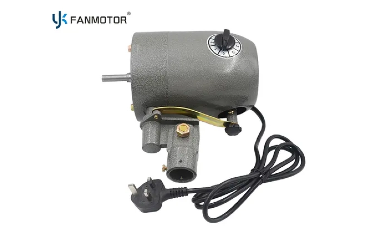
The environment in which the fan motor operates plays a significant role in selecting the right motor. Industrial facilities often expose motors to harsh conditions, such as high temperatures, dust, moisture, chemicals, and vibrations.
Motors used in industrial applications must be able to handle the operating temperature range of the environment. Ensure that the motor you choose is rated for the temperature conditions in your facility. Motors are often classified based on their temperature rating (e.g., Class B, Class F, etc.), which defines the maximum temperature they can operate at without compromising their performance.
If your motor will be exposed to dust, moisture, or chemicals, it is important to select a motor that has proper sealing and protection. Look for motors with an IP (Ingress Protection) rating, which indicates the level of protection against dust and water. An IP54 or IP55 rating is typically sufficient for industrial environments.
Vibration can cause wear and tear on the motor and reduce its lifespan. If your facility involves high levels of vibration, consider motors that are designed to be vibration-resistant or use vibration isolation mounts to protect the motor from damage.
In industrial settings, noise and vibrations can be a concern, especially in environments where noise pollution is regulated or needs to be minimized. Fan motors can generate significant noise and vibrations, especially when running at high speeds.
To reduce noise and vibration, consider the following:
Motor Type: Brushless motors tend to be quieter and generate less vibration than traditional brushed DC or AC motors.
Motor Enclosure: Some motors come with noise-reducing enclosures or casings that can help minimize sound.
Mounting and Vibration Dampers: Ensure that the motor is mounted properly and consider using vibration dampers or isolation pads to reduce noise and vibration.
Selecting a motor with low maintenance requirements can save you time and money in the long run. Some motors, such as brushless DC motors, require less maintenance than traditional motors, as they do not have brushes that need regular replacement.
Regardless of the motor type, all motors require regular maintenance to ensure optimal performance. Look for motors with easy-to-replace parts (such as bearings and capacitors) and those that offer easy access to key components for cleaning and servicing.
Choose motors that are designed to last longer and offer high durability, especially in demanding industrial environments. Motors with premium bearings, sealed enclosures, and robust insulation will have a longer lifespan and require fewer repairs.
To help you choose the right motor, follow these steps:
Assess Your Requirements: Determine the specific needs of your application, including the required airflow (CFM), static pressure, motor speed, and energy efficiency.
Select the Motor Type: Based on your requirements, choose the appropriate motor type (induction, synchronous, DC, or brushless).
Determine Power Rating: Match the motor’s power rating (in horsepower or kilowatts) to the required load for your fan system.
Consider Speed Control: Decide whether a constant-speed or variable-speed motor best suits your needs.
Evaluate Environmental Conditions: Make sure the motor is rated for the temperature, moisture, and vibration conditions in your facility.
Check for Maintenance Needs: Choose a motor that is easy to maintain, with components that can be replaced easily when needed.
Choosing the right industrial fan motor is essential to ensuring efficient, reliable, and long-lasting operation for your ventilation, cooling, or exhaust systems. By considering the type of motor, size, power requirements, environmental conditions, and maintenance needs, you can make an informed decision that will benefit your facility in the long term.
The key to success lies in carefully evaluating the unique demands of your application and selecting a motor that matches those needs. With the right motor, you’ll enjoy improved energy efficiency, enhanced performance, and reduced maintenance costs, helping your facility operate smoothly and efficiently.
If you need assistance in selecting or installing the right industrial fan motor, look no further than trusted suppliers like Guangzhou Yuexun Electric Appliance Co., Ltd. They offer high-quality fan motors that are durable, reliable, and efficient, ensuring that your systems run at peak performance. Whether you’re upgrading your existing equipment or designing a new system, they can provide the expertise and products you need for a successful installation.

| 206,207,208, No. 4, Lijun Road, Xili Industrial Zone, Shatou Street, Guangzhou, Guangdong, China |