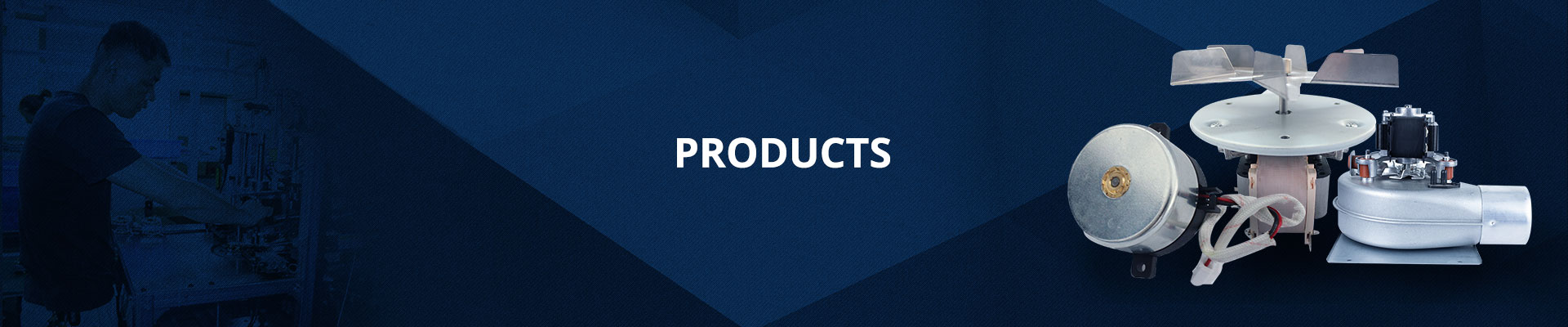
This high-speed fan motor (60-85W, 1350-1500 RPM) drives 20-24-inch mesh fan motors, making it ideal for ventilation of large areas such as factory floors and warehouse ceilings. Its strong airflow effectively reduces moisture and heat build-up in tropical climate conditions. The motor's torque maintains the momentum of the blades even in high-resistance environments, reducing cooling costs by 20-30% compared to systems that rely on AC power.
Tailored for the budget-sensitive market, this motor is available with copper windings (high efficiency), aluminum windings (balanced cost), or CCA windings (light-load energy saving). Copper wire is suitable for all-weather industrial mesh fan motors, while aluminum/CCA is suitable for home or workshop ventilation.
This high-speed fan motor is optimized to operate at less than 60dB noise, with integrated noise-reducing rotor balancing and 2.5μF capacitors to minimize vibration.
This mesh fan motor features a corrosion-resistant 98*24mm silicon steel stator that can withstand humidity, dust or light outdoor exposure in coastal areas. It powers semi-outdoor ceiling fan motors in covered terraces, garage workshops, or shaded industrial areas. The rust-proof coating and sealed bearings extend service life by 30% in harsh conditions, reducing maintenance needs in markets, warehouses, or farm sheds.
Product name | 20 24 inch hanging ceiling fan motor |
Stator size | 98*24mm |
Voltage | 220V/50Hz |
Wire winding material | Copper,Aluminum or CCA |
Power | 60-85W |
Capacitor | 2.5μF,450VAC |
Speed | 1350-1500RPM |
Noise level | <60dB |
Rotation direction | CW |
Insulation level | Class E |
1. Residential: large living room or open-plan house
2. Industrial: production workshop, warehouse, etc.
3. Outdoor: covered terrace or balcony

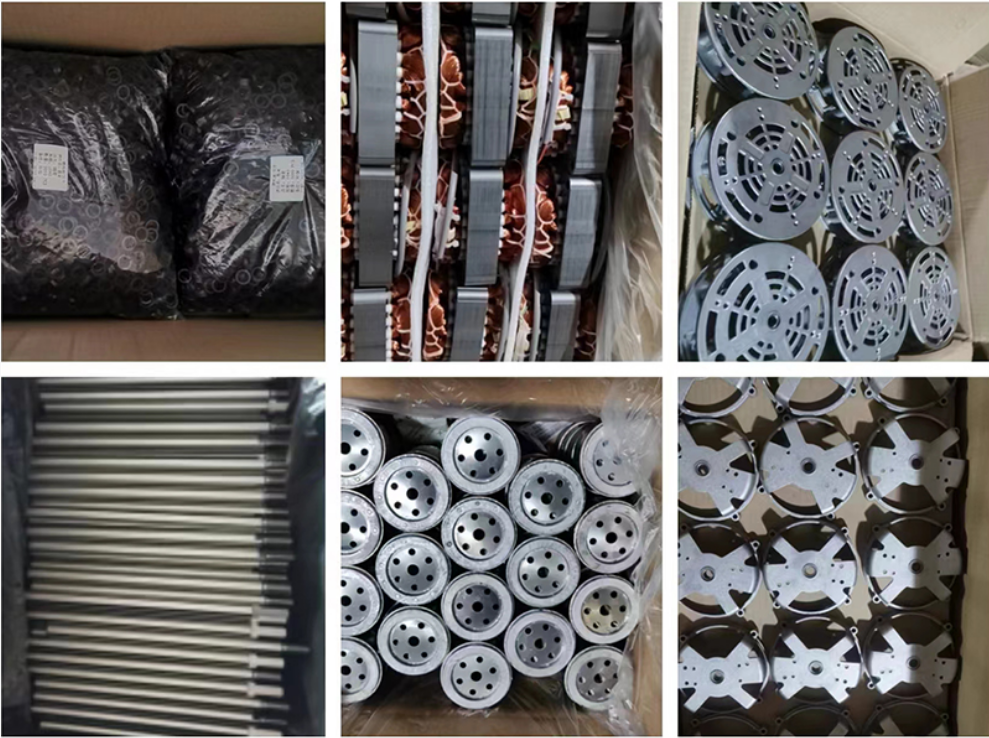
To better ensure the safety of your goods, professional, environmentally friendly, convenient and efficient packaging services will be provided.Can be in Whloe set or SKD packing.
This guide breaks down the differences between shaded-pole and capacitor-run PSC motors for kitchen range hoods, helping OEM and replacement buyers select based on airflow, load, noise and cost.
Sourcing an exact drop-in replacement AC fan motor for 12", 16", and 18" table or wall fans requires matching five mechanical and electrical parameters: (1) Shaft Diameter (typically Ø8.0 mm) and usable extension length(2) Stator Core Stack Dimensions(3) Mounting Stud Pitch / Rear Bracket Pattern(4
This article introduces three vital AC fan motor components: end cover, housing and bracket. Often ignored by buyers, these stamped parts determine vibration, noise, bearing life and corrosion resistance. It covers their functions, material choices and the popular integrated end cover & bracket design for shaded pole motors. A material selection guide, QC rules and OEM service are included for sourcing custom parts or full motors.
When a fan motor fails and the nameplate is burnt, missing, or printed in an unfamiliar code, a fan motor replacement does not have to wait for a part number. Six measurements — shaft diameter, shaft length, mounting hole pattern, body diameter and length, lead exit and stack thickness — plus a resistance reading across each winding tap will identify a drop-in match. This guide explains what to measure, which tolerances actually matter, why rotation cannot be reversed by swapping wires, and how to order from a photo.
Fan motor shaft and bushing assemblies ensure precise torque transmission and dynamic balance in small AC motors (CBB61, shaded pole, cross-flow blowers). Used in table, pedestal, wall, bathroom and industrial exhaust fans and range hoods, with shafts Ø5.0–20.0 mm ground to ISO h6/h7. Options: D-cuts, knurling, threads, circlip grooves, keyways. Materials: AISI 1045 steel with nickel/zinc plating (≥48-hour salt spray) or non-magnetic SUS303/304 stainless for coastal/humid use. Selective induction hardening (45–55 HRC) at bearing seats extends wear life. Suits SAE 841 bushings and 608/6000/6200-2RS ball bearings.
This guide explains why shaded pole motors with identical nameplates vary widely in service life, citing system resistance, ambient temperature, 50/60 Hz traps, and shaft orientation. It covers load curves, impeller power, and sleeve vs. ball bearings, offering a 10-point checklist to specify the right motor, prevent early failures, and optimize total cost of ownership.
On a scorching summer day, flip the fan switch and the blades instantly spin, filling the room with a cool breeze. This effortless, one-second "start-up-airflow" process, however, hides a crucial question: How exactly is electrical energy converted into the power that drives the blades? The answer l
Centered on commercial exhaust motors (12–16 hrs/day at 60–70°C with grease), this article contrasts household hood, oven, and air-fryer motors. It details how duty cycle and exposure drive specs, with a checklist and schedule.
Fan motor sourcing in Southeast Asia and the Middle East starts with frequency, not price. The Philippines and Saudi Arabia run on 60Hz grids; a 50Hz motor run directly on 60Hz spins about 20% faster and is asked for roughly 70% more shaft power, which means overheating and short life. Environment comes second — coastal salt fog and humidity attack insulation, Gulf sand and 50°C heat attack bearings and windings. The guide gives a six-line RFQ checklist, the IP54/IP55 rule for Gulf outdoor exhaust fans, and the buyer-behavior differences between the two regions.
In Indonesia, Vietnam and the Philippines, repair-market buying decisions are made at the workbench, with the old motor in hand. What wins is dimensional fit, model coverage and replenishment speed — not the numbers on a power table. This is how we structure our quotations and shipments.
| 206,207,208, No. 4, Lijun Road, Xili Industrial Zone, Shatou Street, Guangzhou, Guangdong, China |