| Availability: | |
|---|---|
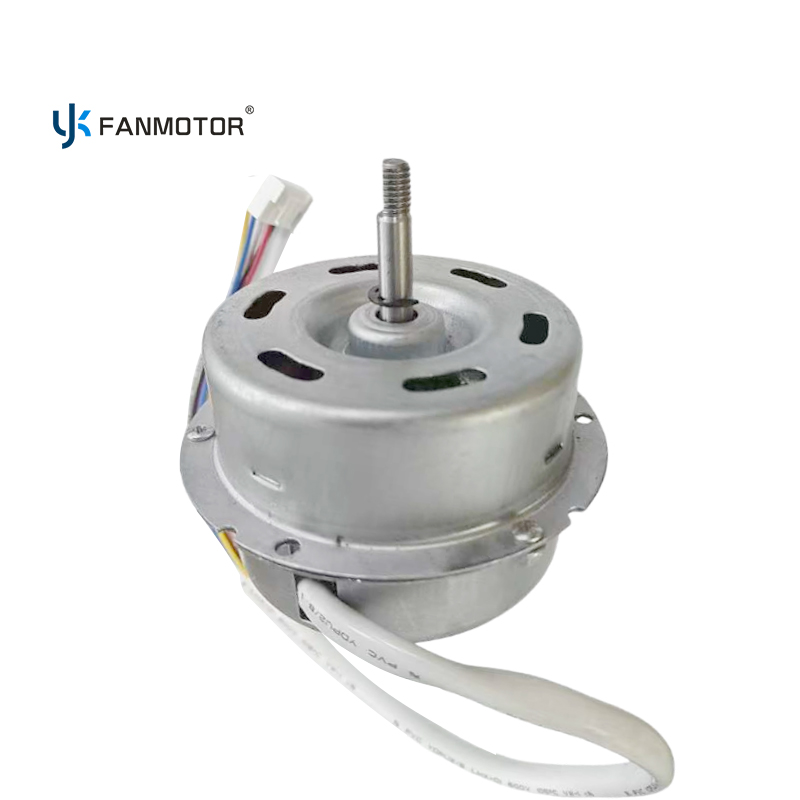
Ceiling fan motor
AC motors
88*20mm
Copper/Aluminum/CCA Wire Winding
220V/50Hz, 110V/60Hz
85W
1250-2500r/min
Guangdong, China
| Product name | Single Phase Asynchronous Motor |
| Application | Ceiling roof hanging orbit fan |
| Stator size | 88*20mm |
| Winding | Copper,Aluminum or CCA |
| Voltage | 110V/220-240V |
| Frequency | 50/60Hz |
| Power | 60-85W |
Fan motor shaft and bushing assemblies ensure precise torque transmission and dynamic balance in small AC motors (CBB61, shaded pole, cross-flow blowers). Used in table, pedestal, wall, bathroom and industrial exhaust fans and range hoods, with shafts Ø5.0–20.0 mm ground to ISO h6/h7. Options: D-cuts, knurling, threads, circlip grooves, keyways. Materials: AISI 1045 steel with nickel/zinc plating (≥48-hour salt spray) or non-magnetic SUS303/304 stainless for coastal/humid use. Selective induction hardening (45–55 HRC) at bearing seats extends wear life. Suits SAE 841 bushings and 608/6000/6200-2RS ball bearings.
This guide explains why shaded pole motors with identical nameplates vary widely in service life, citing system resistance, ambient temperature, 50/60 Hz traps, and shaft orientation. It covers load curves, impeller power, and sleeve vs. ball bearings, offering a 10-point checklist to specify the right motor, prevent early failures, and optimize total cost of ownership.
On a scorching summer day, flip the fan switch and the blades instantly spin, filling the room with a cool breeze. This effortless, one-second "start-up-airflow" process, however, hides a crucial question: How exactly is electrical energy converted into the power that drives the blades? The answer l
Centered on commercial exhaust motors (12–16 hrs/day at 60–70°C with grease), this article contrasts household hood, oven, and air-fryer motors. It details how duty cycle and exposure drive specs, with a checklist and schedule.
Fan motor sourcing in Southeast Asia and the Middle East starts with frequency, not price. The Philippines and Saudi Arabia run on 60Hz grids; a 50Hz motor run directly on 60Hz spins about 20% faster and is asked for roughly 70% more shaft power, which means overheating and short life. Environment comes second — coastal salt fog and humidity attack insulation, Gulf sand and 50°C heat attack bearings and windings. The guide gives a six-line RFQ checklist, the IP54/IP55 rule for Gulf outdoor exhaust fans, and the buyer-behavior differences between the two regions.
In Indonesia, Vietnam and the Philippines, repair-market buying decisions are made at the workbench, with the old motor in hand. What wins is dimensional fit, model coverage and replenishment speed — not the numbers on a power table. This is how we structure our quotations and shipments.
Standard motors tested at room temperature (25℃) often fail during their first summer in the Gulf. At 50℃ ambient, a standard Class F motor operates at its absolute limit with zero safety margin. The proven fix requires either output derating or upgrading to Class H insulation, paired with 105℃-rated capacitors and high-temperature polyurea/lithium grease.
Motors in the Gulf don't usually fail because the copper wire burned out. Sand kills the bearings first. To make your fans last in Saudi Arabia, UAE, or Iraq, you need the right shaft seals and proper IP ratings based on where the fan is actually installed.
A 50Hz fan motor on a 60Hz grid runs ~20% faster, demanding ~73% more impeller power — so it burns out by the first hot season in the Philippines and Saudi Arabia. This post explains the physics simply, compares relabel vs dual-rated vs genuine 60Hz winding, contrasts PH and KSA thermal demands, lists YKFANMOTOR's 60Hz deliverables, and closes with an FAQ.
Coastal Southeast Asia breaks fan motors in three predictable ways: moisture in the winding, salt fog on the shaft and terminals, and low grid voltage that kills starting torque. None of these is fully avoidable — but most of the risk can be designed out at the specification stage. This guide walks through the failure mechanisms, the practical countermeasures, and a checklist you can use with your supplier.
| 206,207,208, No. 4, Lijun Road, Xili Industrial Zone, Shatou Street, Guangzhou, Guangdong, China |